
Provo Previous Residents Sources
Each era leaves a different kind of trace. The recorder follows instruments and legal interests. The library’s city directory shelf follows published names, occupations, and addresses. Newspapers and cemeteries can mark a death or family link. Permits place construction work and applicants in a chronology. Archives may hold registers or court series arranged by year rather than by name.
| Source | Years It Covers | Where Held | What It Shows |
|---|---|---|---|
| Utah County Recorder | Official records from 1870; index eras differ | Land Records and office | Parties, instruments, legal descriptions, images |
| 1884 Utah Gazetteer | 1884 | Provo Library | Early names, roles, addresses |
| Polk directories | 1917–18 through 2004-present, with gaps | Library Special Collections | Annual or edition household snapshots |
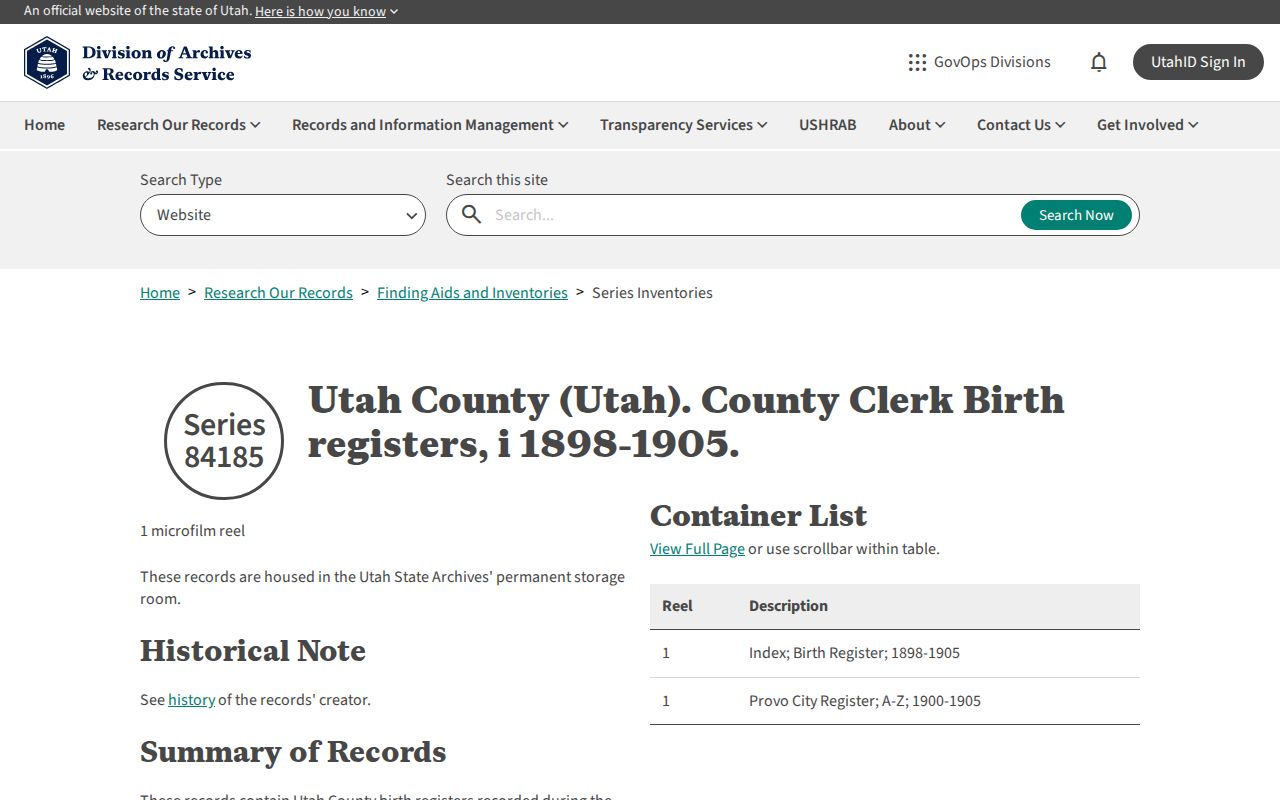
| Provo birth-register series | 1898–1905 | Utah State Archives | Chronological register and father-surname index |
| Obituary index | 1870s–2007, with newspaper runs | Provo Library Rogers Wing | Newspaper title and date, not guaranteed text |
| Provo permits | Current and past map records | Provo Building | Permit, applicant, contractor, date, address or parcel |
The coverage row is a planning tool. It does not promise that every year, image, street range, or name is indexed. Mark each gap and use a different series to bridge it.
The Utah State Archives birth-register series describes the 1898–1905 arrangement used for older Provo research.
Trace Provo Previous Residents by Deed
Utah County Recorder Find Records says official records begin in 1870. The alphabetical index is handwritten through January 1978 and computerized from January 1978. The abstract is handwritten or typed through September 1985, with computerized online material from May 1980. Use the live page’s labels and preserve the overlap.
- Find the current parcel serial in the assessor or GIS tool.
- Open the current record and save the latest entry, parties, date, legal description, and image link.
- Follow the prior grantor and grantee names, searching the serial and name in multiple formats.
- Compare entry year, recording time, book or page, parcel history, plat, and historic GIS date.
- Flag gaps, invalid instruments, and legal-description changes for an office or archive follow-up.
A grantor transfers or encumbers an interest. A grantee receives an interest. The chain of title is the ordered set of recorded interests used to trace land. The legal description is the formal land identifier. A street address is a locator, not always the recorder’s key.
The Utah County Recorder search hub is the starting point for the parcel and deed chain behind previous residents.
Provo Previous Residents Address Changes
Provo’s 1902 postal and numbering change is a major trap for previous-resident searches. Lettered north and south streets and numbered east and west streets changed to the current system. Old J Street became Academy Avenue, now University Avenue. The first postal delivery is dated February 1, 1902. The 1904–05 guide uses Center Street and Academy Avenue as the initial point for the newer scheme.
Do not overwrite the old address with a modern guess. Copy it as printed, then compare the directory street guide, historic maps, parcel shape, plat, legal description, and later deed. The same property can look like two places when the street name and number have changed. A literal address search can miss the record entirely.
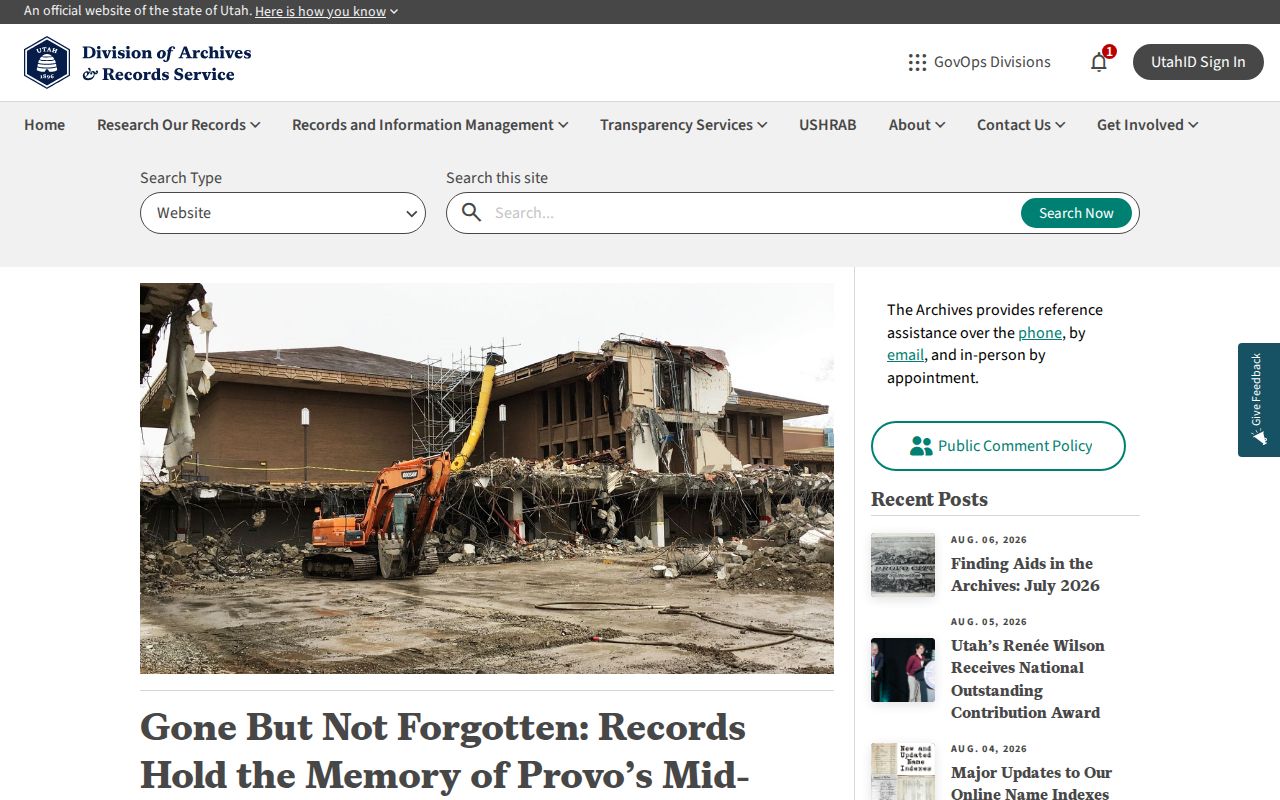
The Utah Archives Provo city-center history gives a local records lead for older addresses.
Provo Previous Residents by Year
Directory years fill some gaps between federal census releases. Provo Library holds Polk editions in a long but uneven run from 1917–18 through 2004-present. The 1904–05 digitized volume shows that a person may have a business address and a separate residence. Keep both. Pair the closest directory with a census year available under the federal 72-year release rule, then use a deed, obituary, permit, or newspaper to test the interval.
- Choose the directory edition nearest the known date.
- Copy name, spouse or initials, occupation, residence, business address, and marks such as bds or res.
- Compare the same address in the nearest available census.
- Check the next directory edition for a move, changed spelling, or new household.
- Use a newspaper, cemetery, deed, plat, or permit to explain the gap.
A missing name is not proof of departure. Publication rules, missing volumes, changed street names, and unlisted people all create false breaks. Previous residents should be described with the exact year and evidence level.
Provo Previous Residents Permit Clues
Provo Building’s permit map covers current and past permits and is described as searchable by permit type, contractor, and date, with address or parcel and monthly reports. Historic reports require GRAMA. Permit number, issue date, applicant, contractor, type, building use, address, parcel, zone, units, valuation, and status can build a construction chronology. A permit applicant is not automatically a resident or owner.
Sanborn maps can help bridge a historic street segment to a present parcel, but the research located a discovery screen rather than an exact Provo sheet and year URL. Verify the sheet before promising coverage. Compare the map with a plat, deed legal description, directory street guide, and parcel geometry. A map is a location aid, not a person index.
Provo Previous Residents Library Records
The directory cabinet at Provo Library is described in oral history as locked in the northwest corner, with a key and two- or four-hour viewing intervals. Confirm current rules. The library’s 1884 volume and Polk runs are the main local city-directory holdings. The obituary index contains about 20,000 entries, and microfilm is available in the Rogers Wing. An index hit supplies a newspaper title and date, so retrieve the issue or request a scan.
Nearby pages and dates can add a correction, funeral detail, second notice, or surviving-family name. Provo Cemetery’s searchable map and original Sexton records can corroborate a death or burial. Search the newspaper, cemetery, and directory as separate records. That three-source pattern is more reliable than treating one name as a complete household history.
Provo Previous Residents Archive Books
The State Archives research interface uses search type, site, name or keyword, date, description, and digital-collection fields. Some Fourth District historical court books are browseable by year and volume but are not name-searchable in the digital viewer. Provo’s 1898–1905 birth-register series is arranged chronologically by year or report with a separate alphabetical father-surname index, not as a simple month-and-day name list.
For a nineteenth-century case, start with the year and volume, then follow the arrangement. A failed name search does not establish that no record exists. Capture the series, volume, page or image, and search boundary. Older court events may cross county, city, district-court, archive, newspaper, and library custodians.
Separate Provo Previous Residents Evidence
A 1904 directory entry can list a business on Center Street and a separate residence. The printed marks bds and res show why a historical name search needs interpretation. A recorder party may be a buyer, seller, lender, heir, or other instrument party. A tax owner may receive mail elsewhere. A permit applicant may be a contractor. Preserve each relationship rather than compressing all of them into “resident.”
- Grantor
- Party transferring or encumbering an interest.
- Grantee
- Party receiving an interest.
- Chain of title
- Ordered recorded interests used to trace a parcel.
- Legal description
- Formal land description that may outlast a street label.
- Residence entry
- A directory statement about where a person resides in that edition.
Safe Provo Previous Residents Research
Previous residents research supports family history, heir work, neighborhood history, and curiosity about a house. It should not expose protected voter addresses, Safe at Home locations, full DOBs, SSNs, state-ID numbers, sealed case details, or unnecessary information about living people. Cite the custodian and use a redacted note or image when the field layout is what matters.
Lawful personal use. Do not use a previous-residents search to stalk, harass, intimidate, or harm anyone. A public record is not permission to create a course of conduct against a person.
For records not exposed online, ask the relevant custodian for an existing record. Provo GRAMA is a route for a specific city-held record, while county, court, vital, library, and archive sources have their own procedures. A date, serial, legal description, and source log leave a useful trail for the next researcher.