
Search Provo Resident Records
A name, street, or year points to a different first stop. An address belongs with the Utah County Assessor and Parcel Map. A person’s public case history belongs with Utah XChange, while a death clue belongs with the Provo Library obituary index or cemetery search. A past household may appear in a directory even when no current tax or voter record matches it. No single official roster was located for all people living in Provo.
Use a short, repeatable path. Write down the exact query, date checked, source URL, and reason a result supports identity. A strong match uses at least two anchors, such as a middle name, year, address, spouse, occupation, parcel, or newspaper date. The resident records directory is most useful when it is treated as a set of custodian-held clues, not as proof that every person at a place is listed.
- Start with the known name or address in the county property and land-record tools.
- Save the parcel serial and compare the property location with the owner mailing address.
- Use the Utah voter-status search only for the public fields it actually returns.
- Check a directory, newspaper, cemetery, court, or vital source that fits the person’s era.
- Ask the custodian for an existing record when the online path ends.
Provo Resident Records Offices
Provo is the Utah County seat, so a local search often crosses city, county, and state offices. The Utah County Recorder handles recorded instruments and ownership maps. The Assessor supplies tax-appraisal and parcel information. County Elections handles voter data requests. Provo adds permits, code complaints, licenses, cemetery records, and a GRAMA route for existing city records. Each office answers a narrower question than the phrase “resident” suggests.
Utah County Recorder
100 E Center St Suite 1300
Provo, UT
801-851-8179
For city-held records, Provo Recorder and GRAMA contact information is 445 W Center Suite 410, 801-852-6524, generally Monday through Thursday, 7 to 6. Utah County’s Recorder counter is generally open Monday through Friday, 8:30 to 5. Call for procedure, not title research. The Recorder says it does not conduct title research by phone.
Provo Resident Parcel Search
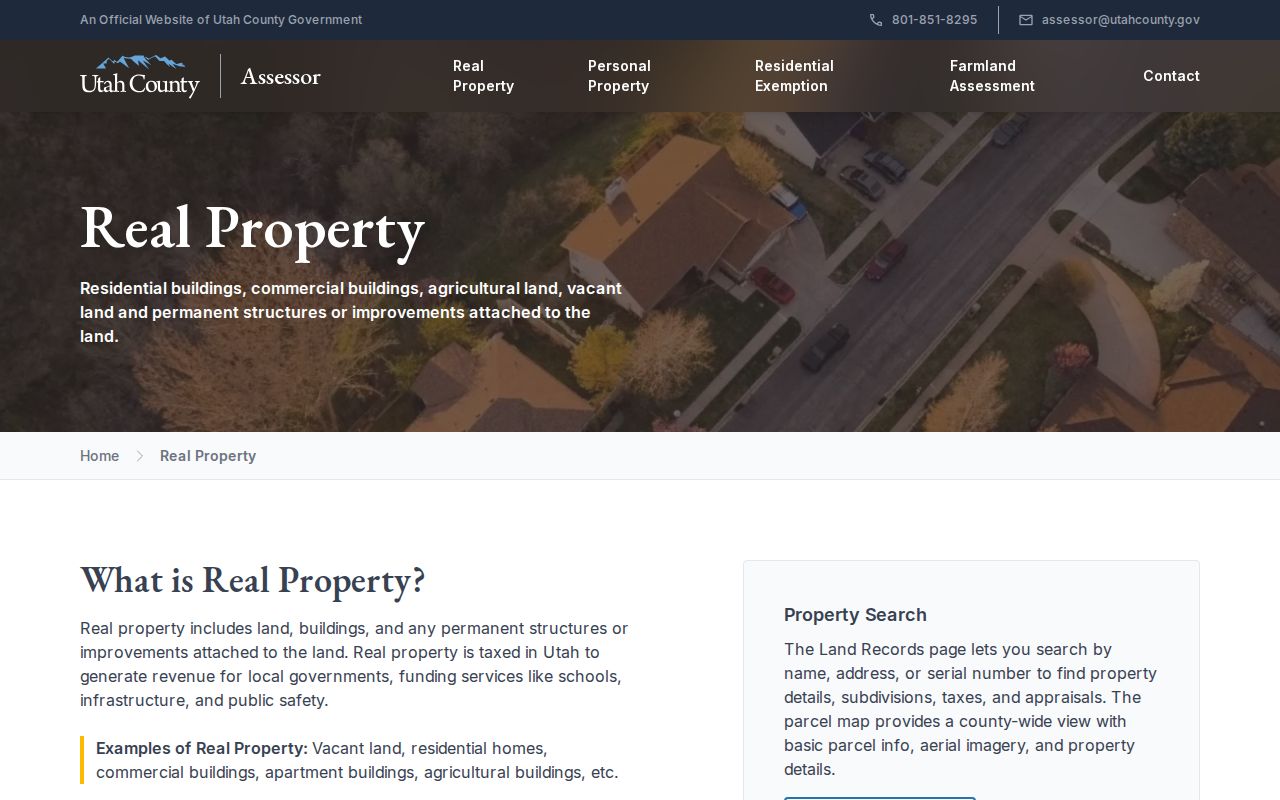
The Utah County Assessor real-property portal routes users toward owner, address, and serial-number searches. The county guide says to enter a number, direction, street, and optional city, then use the green year with an ellipsis to identify a valid property result. Clicking the serial number opens more property information. The assessor describes market value as a tax-assessment figure. It does not set tax rates, collect taxes, or decide title.
The Utah County Assessor route supplies the serial-number pivot for a Provo records search.
| Search clue | Name, address, serial number, or tax year |
|---|---|
| Useful fields | Property or situs location, owner as displayed, mailing address if shown, legal description, subdivision, lot and block |
| Next pivot | Save the serial, then open GIS, recorder history, deed entry, or related parcel links |
| Caution | Mailing address and situs address are separate evidence fields; neither alone proves occupancy |
The Utah County Parcel Map adds parcel shape, city and PLSS layers, basemaps, measurements, deed points, exports, and a historic-parcel-date control. GIS says that historic date is the date entered in the online system, not necessarily the date a deed was recorded. That distinction matters when a property split or subdivision is being reconstructed.
The county parcel viewer adds the map and historic-date layer to the property search.
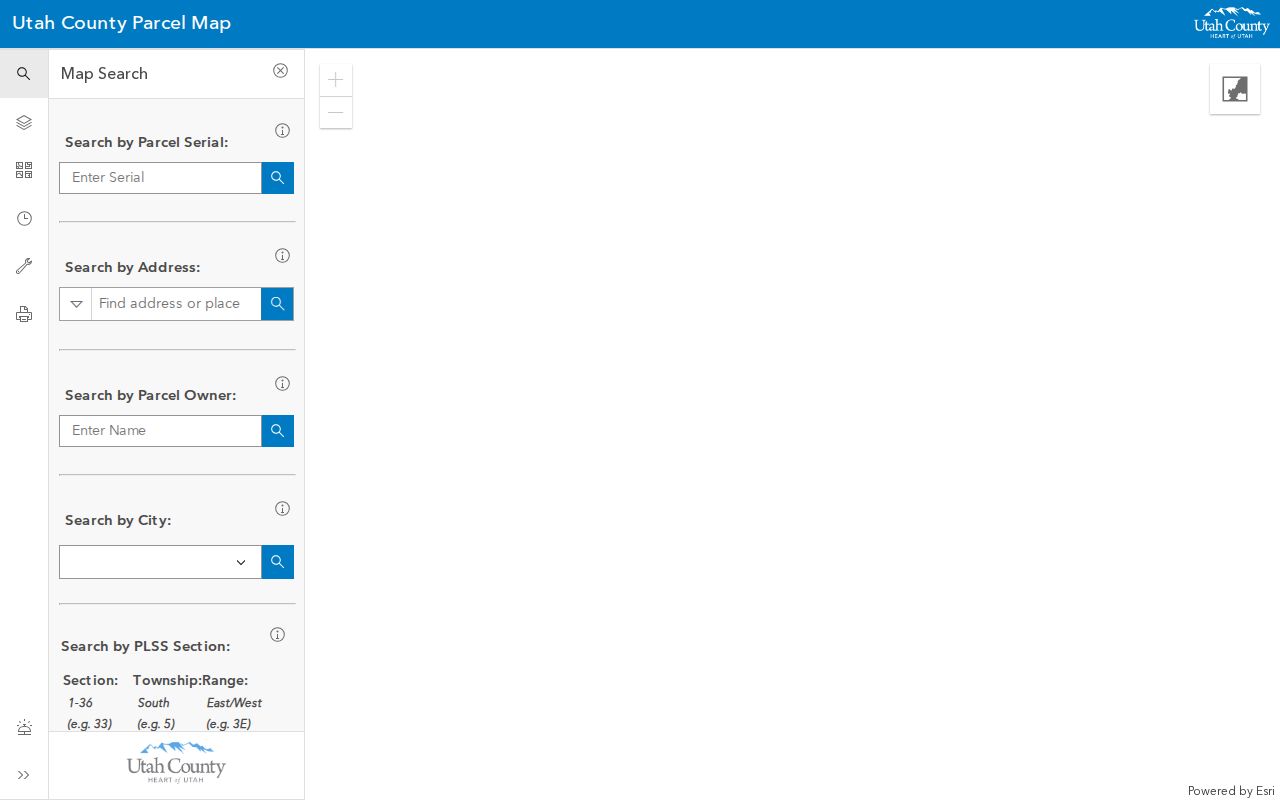
Note: Save the parcel serial before changing tools, because it is the cleanest bridge from an address question to the recorder’s document index.
Provo Resident Deed Records
The Recorder says official records reach back to 1870, but its index layers have different eras. The alphabetical index is described as handwritten from 1870 through January 1978 and computerized from January 1978 forward. The abstract is described as handwritten or typed from 1870 through September 1985, with computerized online material beginning in May 1980. Preserve those overlapping boundaries in a research note instead of turning them into one simple cutoff.
Search by party name in the form LAST, FIRST MIDDLE, test Current Records Only and then All Records, and explain a Never Valid Only hit instead of treating it as a transfer. The address form separates number, direction, street, street type, and city/location. The recordings form accepts entry number and year or a date range. A result can show entry number, recorded date and time, fees, recorded-by field, page count, image, principal parties, document type, legal description, parcel, and property location.
Research pivot. When a name or address match appears, move to the serial number and then compare the deed entry, legal description, parcel map, and current-record flag.
A grantor is a principal party who transfers or encumbers an interest. A grantee receives an interest. A deed is an instrument in the index, not a statement that someone slept at the property. Copy the legal description before translating it to a modern street label.
Provo Current Resident Directory Sources
Current Provo resident records come from different systems. The county property roll is owner-centered. Voter status is registration-centered. The recorder is instrument-centered. Provo’s staff directory is an office-contact list, not a household list. A neighborhood district list describes civic geography. The table keeps those meanings apart.
| Source | Evidence | Keeper | Access |
|---|---|---|---|
| Assessor and parcel map | Owner, parcel, tax context | Utah County | Online search |
| Voter status | Name, registration address, precinct and districts when public | Utah Elections | Individual search |
| Recorder index | Parties to deeds, liens, plats, and releases | Utah County Recorder | Online index and office |
| City staff directory | Public office contact | Provo | Online directory |
| Neighborhood districts | District and neighborhood organization | Provo | Public civic page |
That separation prevents a common error. An owner may have a different mailing address. A voter may be registered but not be the only person at the address. A deed party may be a lender, seller, heir, or former owner. The Provo residents directory is strongest when two independent records agree on a time and place.
Provo Voter Lookup Fields
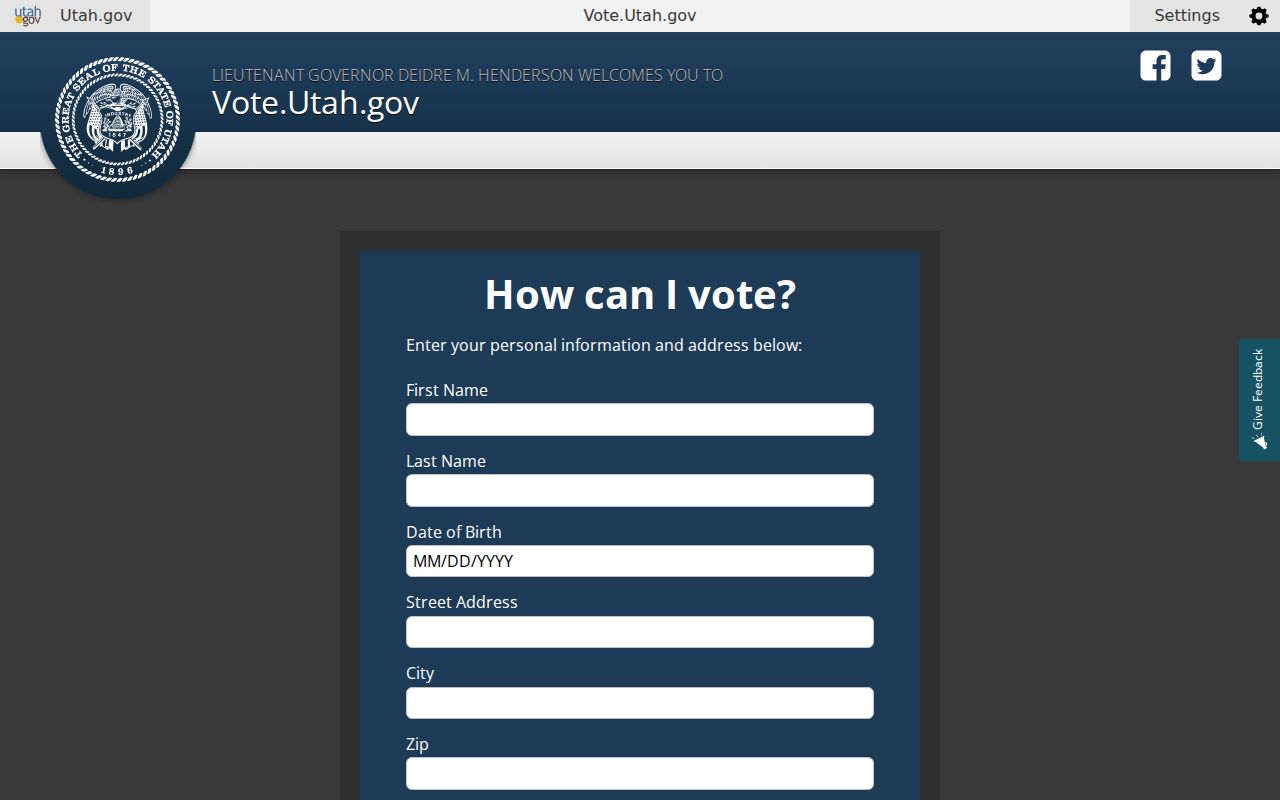
The Utah individual voter-status search asks for first name, last name, date of birth, street address, city, and ZIP, followed by Submit. The page is JavaScript-rendered, and the research did not expose a browse tab, result cap, sort, or export control. Use it as a status check, not as an open people list.
| Field | Type | Use in a Provo search |
|---|---|---|
| First Name | Text | Pair with last name |
| Last Name | Text | Use exact spelling and variants |
| Date of Birth | Date or text | Identity anchor, not a field to publish |
| Street Address | Text | Check address-level registration |
| City and ZIP | Text | Separate postal label from city boundary |
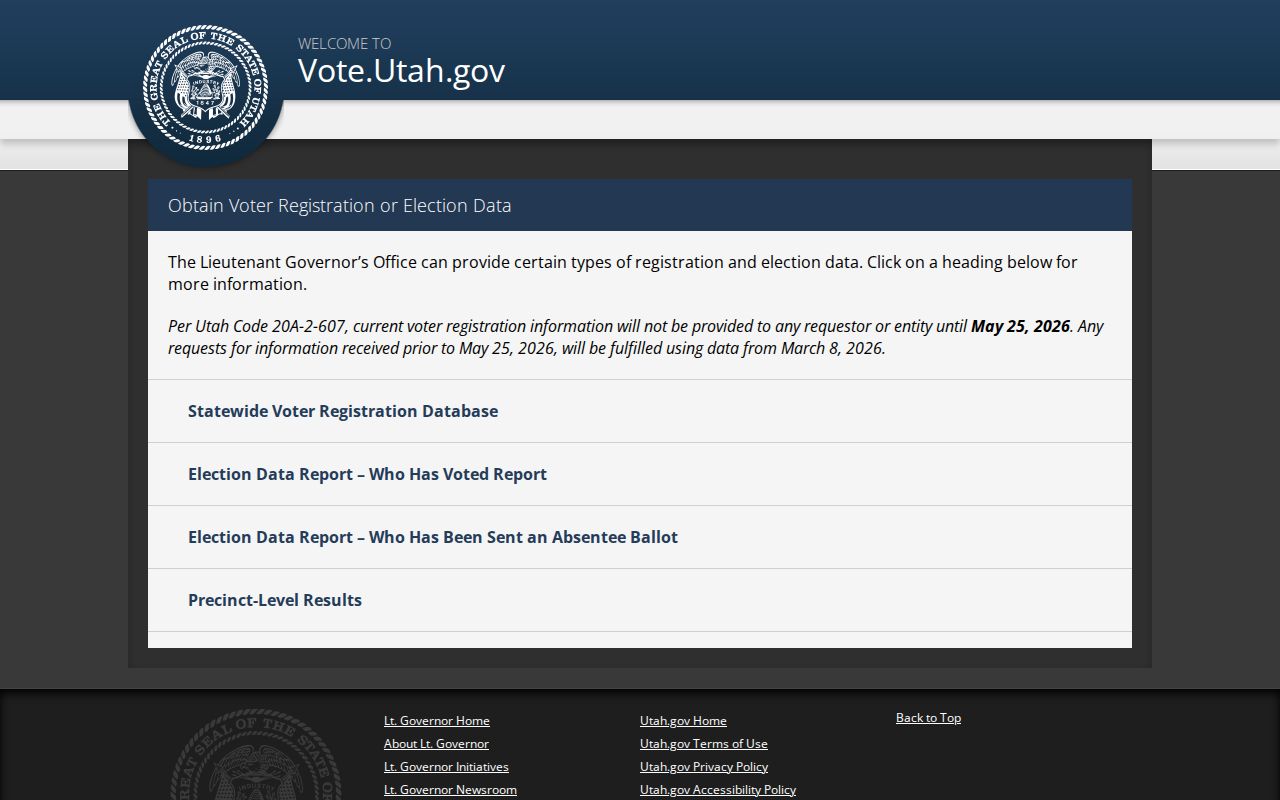
Public voter data can include name, voter ID, residential or mailing address, precinct, districts, party or status, and vote history, subject to Utah privacy rules. Full date of birth, identification numbers, Social Security number, email, phone, and qualifying protected-voter records remain withheld. A May 25, 2026 SB153 change made many previously private voter-registration fields public, but did not open those protected fields or at-risk records. Date any saved explanation.
The Utah voter-data information page explains the controlled file route and privacy limits.
The individual voter-status form shows the name and address fields used for one record.
Provo Historical Resident Directory
Provo’s historical directory shelf provides a different kind of resident evidence. Provo Library lists the 1884 Utah Gazetteer and Directory, a 634-page volume, and Polk’s Provo City and Utah County runs from 1917–18 through 2004-present with listed gaps. The 1904–05 digitized Polk volume shows names, occupations, employers, residence or business addresses, phones or references, and cross-references. A directory entry can place a person in a year without proving that the person owned the building.
Provo’s address system creates a local trap. In 1902, lettered north/south streets and numbered east/west streets changed to the current system. Old J Street became Academy Avenue, now University Avenue. The 1904–05 street guide uses Center Street and Academy Avenue as its initial point. Test historic names, a directory street guide, parcel geometry, deeds, and maps together. The full collection trail belongs in the Provo city directory collections discussion.
The Utah County Recorder find-records hub supplies the land-record route that complements older address research.
The library’s oral-history description says the directories sit in a locked northwest-corner cabinet and are viewed in two- or four-hour intervals with a key. Confirm current Special Collections rules before visiting.
Provo Vital Resident Records
Vital records are not a casual resident list. Utah Code §26B-8-125 sets public thresholds of 100 years for birth records, 50 years for death records, and 75 years for other vital records, excluding confidential medical information from public birth access. Newer certified copies require a qualifying relationship, direct tangible legitimate interest, identification, or other proof. Utah County Health provides local counter service at 151 S University Ave Suite 1100, while the state issues statewide certified records.
The current marriage/divorce request form covers 1978–2010 and limited 2011-present. It asks for both spouses, event place and date, applicant relationship, proof when needed, contact details, ID, copy counts, delivery, and signature. Fees are non-refundable; incomplete requests can remain unresolved for 90 days. A marriage license application is routed through the Utah County Clerk, while a certified certificate comes through Vital Records. The right source depends on the record and the requester’s eligibility.
The Utah Vital Records hub identifies the statewide ordering route for birth, death, marriage, and divorce records.
Provo Resident Court Records
Utah XChange covers Utah district and justice case information, with justice-court coverage varying by court. Public electronic district documents filed since July 1, 2010 are available for purchase. A public case result may show court, case number, category, parties, filing date, history, minutes, public orders, document title and date, and disposition when displayed. Sealed, expunged, juvenile, adoption, civil-commitment, and other protected categories are not displayed. Provo Justice Court is at 75 E 1700 S Suite 100, 801-852-6878.
For a public professional affiliation, Utah Division of Professional Licensing supplies a verification route. Utah Commerce also supports business-entity and UCC searches. A license or business filing may show a business, mailing, or statutory-agent address. It should not be converted into a home address. County jail, state offender, and offender-registry searches have their own scope and legal warnings. A court, booking, or registry hit is a record lead, not proof of current residence or guilt.
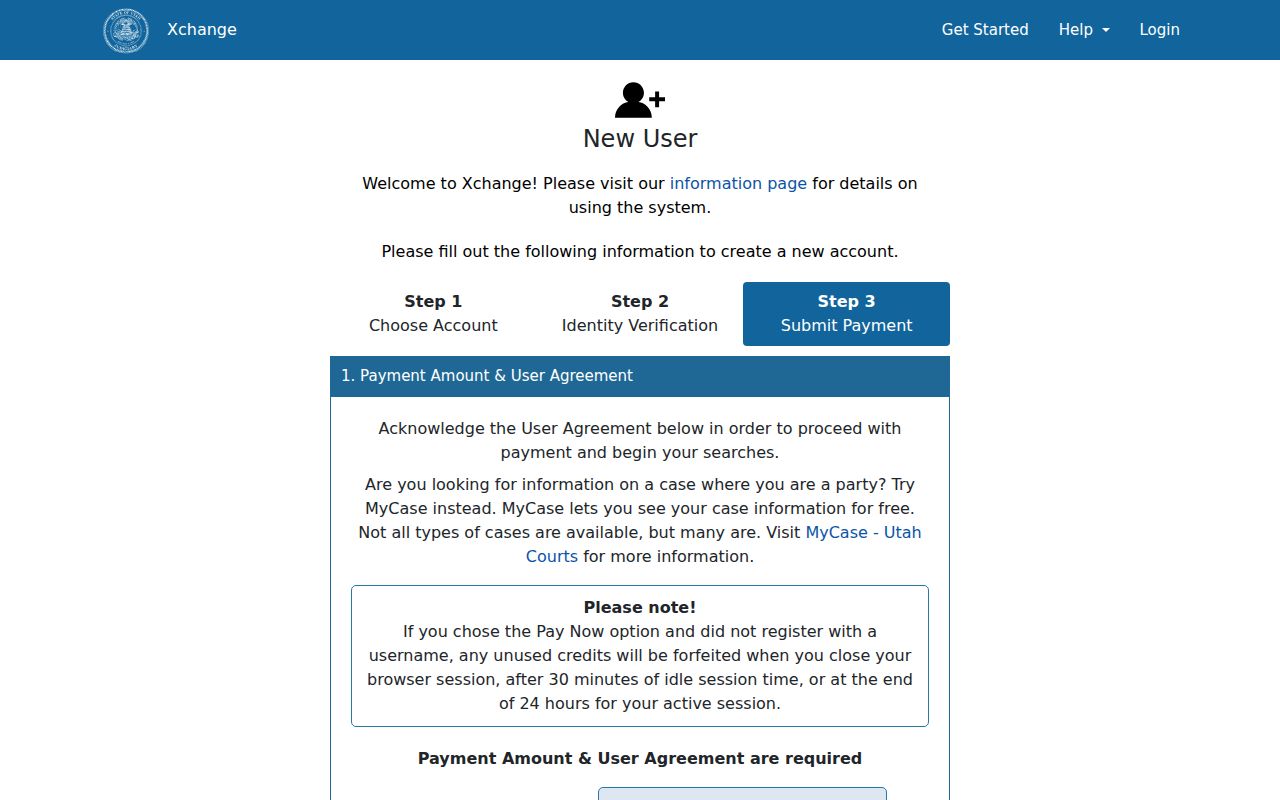
The Utah XChange guest entry shows the access route for public case searching.
Provo Civic Resident Records
Provo’s five Neighborhood District Program areas, meeting pages, and neighborhood lists describe civic geography rather than a resident roster. The city staff directory is useful for reaching the Recorder, Justice Court, Library, Cemetery, Planning, Building, Code Enforcement, Police, and Public Works offices. Citywide 311 routes service questions inside Provo, while outside callers use 801-852-6000. These public contacts help identify a custodian without exposing a household list.
Provo Cemetery was established in 1853 and offers a searchable map, original Sexton records, and a state burial-record link. The office is at 610 S State, 801-852-6607 extension 2. The Utah County Obituary Index has about 20,000 entries, and the cemetery has approximately 38,000 burial spaces. An obituary index result usually supplies a newspaper title and date, not the full story. Use the newspaper issue, cemetery record, and a second identity anchor.
The Utah County history and offices page places Provo’s local records in the county-seat structure.
Provo Public Records Requests
Utah’s Government Records Access and Management Act, or GRAMA, is a fallback for an existing record that a portal does not expose. Utah Code §63G-2-204 calls for a written request naming the requester, mailing address, email if offered, daytime phone, and a specific description of the record. An ordinary response is as soon as possible and no later than 10 business days; an expedited response is no later than 5 business days when the statutory conditions apply. §63G-2-301 identifies public records subject to protected classifications, and §63G-2-203 addresses reasonable actual costs.
Provo’s request path asks for an existing record rather than open-ended research. A precise request might identify a permit number, monthly permit report, public agenda, or other known record category and date. The county has its own request and payment route. GRAMA cannot waive voter, vital, court, Safe at Home, or other confidentiality rules. If a record is not held by the office, route the request to the correct custodian.
The Utah County Clerk page shows the county service route for elections and marriage records.
Provo Directory Source Comparison
Official rolls and commercial people-finder tools answer different questions. County, city, state, library, archive, and court sources identify the custodian and the record class. Commercial tools may combine old data from many places, charge for access, and offer little context for a mismatch. Neither category should be used to publish a private person’s sensitive details or to infer facts the source does not state.
| Source type | Best use | Main limit |
|---|---|---|
| County parcel and deed records | Land association and instrument history | Owner or party is not automatically an occupant |
| Voter status or file | Registration evidence within public fields | Protected fields and at-risk records remain closed |
| Library, obituary, cemetery, archive | Historical presence and family research | Runs, indexes, and image access have gaps |
| Commercial search category | Broad lead generation only | Cost, stale data, weak provenance, and lawful-use limits |
Keep the source, date, field, and confidence beside each result. The phrase “Provo resident” can mean a property owner, registered voter, directory entry, court party, business contact, or person named in a historical record. Those are not interchangeable labels.
Provo Resident Records Terms
Small words carry large differences in a Provo records search. A notebook that preserves the source’s own label is less likely to turn a tax record into an occupancy claim.
- Roll
- A compiled list for a purpose, such as tax assessment or voter registration.
- Index
- A finding aid that points to a record; it may not include the document image.
- Parcel
- A mapped tract identified by a serial or legal description, not a list of all people there.
- Criss-cross directory
- An address-first or street-order section used to connect a place with a name, often in older directory work.
- Situs address
- The property location, which should be kept separate from an owner’s mailing address.
The same location can carry a parcel, postal ZIP, Census ZCTA, neighborhood district, precinct, council district, and county label. Provo’s foothills, river, lake, and later subdivisions make map layers especially important outside the old grid.
Safe Provo Resident Research
Family history, reconnecting with a former classmate, tracing an heir, researching a house, checking a public meeting contact, and verifying a caller’s claim are appropriate reasons to learn how these records work. A former neighbor can be researched by combining a directory year, obituary or cemetery index, newspaper date, and two identity anchors. A seller or caller should be checked against an official office domain and phone number, not a payment link supplied in an unexpected message.
Lawful personal use. Public availability does not erase privacy. Do not use Provo records to stalk, harass, intimidate, or harm anyone, and do not publish protected addresses, full birth dates, identification numbers, or sensitive case details.
The best source log records the exact portal, search fields, date, result URL, and reason a record was kept. When the online source stops, use the office counter, library, archive, mail, phone, email, or a specific GRAMA request that the research identifies. That is how a Provo residents directory search stays useful, local, and honest about what each record proves.